

Process simulation
should communicate
certainty, not just results.
Equilibria is a new generation of engineering software where every simulation is transparent, every assumption is visible, and every result can be understood. At the center is the Certainty Index, helping engineers understand what a simulation predicts, the scientific basis behind it, and the evidence and limitations that shape confidence in the result. The current MVP focuses on binary distillation, combining first-principles engineering, modern software, and AI to help students and professionals build judgment with confidence.
Binary distillation shown here as the current MVP. Additional unit operations and capabilities are in development.
PROGRESSIVE MODEL FIDELITY. BUILT FOR LEARNING.

FOUNDATIONAL
Idealized models and core balances. Learn the fundamentals through idealized assumptions, phase equilibrium, and core mass and energy balances.
INTERMEDIATE
Non-ideal phase behavior. Introduce activity-coefficient methods and the effects of mixture non-ideality on phase equilibrium.
ADVANCED ACADEMIC
Detailed thermodynamic and equipment models. Refine phase-equilibrium predictions and introduce equipment-level effects such as tray efficiency.
PRE-INDUSTRY
High-fidelity process behavior. Incorporate equation-of-state methods, hydraulic effects, and additional transport and operating conditions.
INDUSTRY
Validated process models. Apply system-specific model selection, calibration, and validation against experimental or plant data.
SEE EQUILIBRIA IN ACTION
The People Behind Equilibria

Alejandra Tena is a chemical engineer, software engineer, and founder of Equilibria Technology. She began her undergraduate studies at Texas Tech University before earning her B.S. in Chemical Engineering from the University of Texas at San Antonio. Her technical work spans full-stack software development, API and database architecture, and scientific computing. At Texas Tech, she spent a semester as an undergraduate research assistant in Dr. Jeremy Marston's fluid dynamics laboratory, capturing high-speed imaging of jets from needle-free injectors for a study on how fluid properties affect jet behavior. She also works in frontier AI evaluation and benchmarking, designing rigorous analytical tasks and evaluating model reasoning, reliability, and failure modes. Her work at Equilibria brings these areas together to develop engineering software that makes simulation more transparent, educational, and trustworthy.
Alejandra Tena
Founder & CEO · Chemical Engineer · Software Engineer
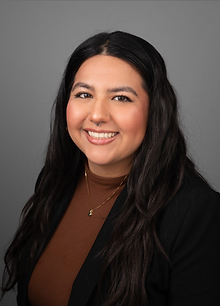
Alejandra Teran is a chemical engineer with a Master of Business and Science from Rutgers University, combining technical expertise with business strategy, product development, and entrepreneurial training. She brings 4+ years of R&D and product development experience at Henkel and Southwest Research Institute, with expertise in process optimization, scale-up, formulation, and data-driven problem solving. Her experience includes developing and scaling new products, conducting experimental research, and collaborating across cross functional teams to bring complex concepts from development toward implementation. Alejandra is excited to bring her engineering expertise, product development experience, and business perspective to Equilibria Technology.
Alejandra Teran, MBS
Senior Engineer · Product Development · Chemical Engineer
_JPG.jpg)
Dr. Marston is a professor of Chemical Engineering and has been at Texas Tech University in Lubbock Texas since 2014. His research involves the application of ultra-high-speed video to fluid dynamics, with a particular emphasis on drug delivery. In recent years, his research group has focused on needle-free drug delivery devices, in collaboration with industry. Prior to Texas Tech, Dr. Marston earned his MS in Mathematical Sciences and PHD in Chemical Engineering from the University of Birmingham in the UK, then was a research fellow at A-STAR in Singapore, and a research scientist at King Abdullah University of Science and Technology (KAUST) in Saudi Arabia. At Texas Tech, Dr. Marston has taught classes at both undergraduate and graduate level in chemical engineering, including introduction to chemical processes and fluid mechanics for chemical engineers.
Jeremy O. Marston, PhD
Professor of Chemical Engineering · Texas Tech University

Gongchen Sun is an Assistant Professor in the Department of Biomedical Engineering and Chemical Engineering at The University of Texas at San Antonio (UT San Antonio). He received a B.S. in Electrical Engineering from Peking University in 2012 and a Ph.D. in Chemical and Biomolecular Engineering from the University of Notre Dame in 2017, followed by postdoctoral training in bioimaging and bioengineering at the Georgia Institute of Technology. His lab at UT San Antonio studies non-equilibrium interfacial transport phenomena at the micro- and nanoscale, with research interests in microscale additive manufacturing, multiphase microfluidics, nonlinear electrokinetics of soft ion-exchange materials, and biological active colloids. Gongchen serves as Secretary for the American Electrophoresis Society, and is the conference chair organizing the AES Annual Meeting in 2025 and 2026. He also serves on the Early Career Editorial Advisory Board of Biomicrofluidics.
Gongchen Sun, PhD
Professor of Chemical Engineering · UT San Antonio